Central – Edinburgh Place ca.1950
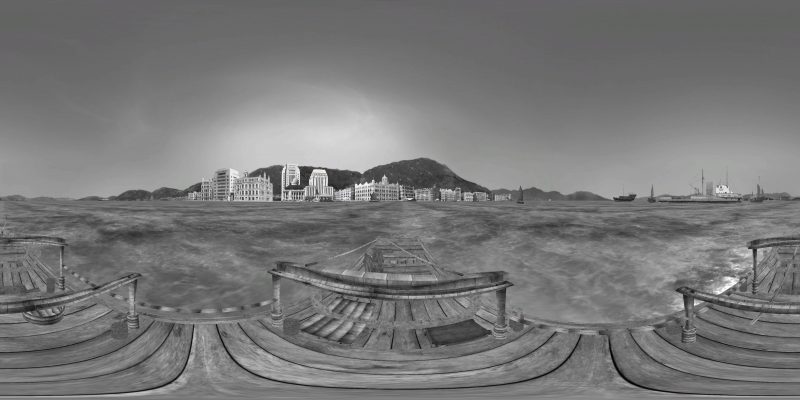
360-degree panoramic artwork developed from historical photos
Historical Hotspots:
The Hong Kong Club
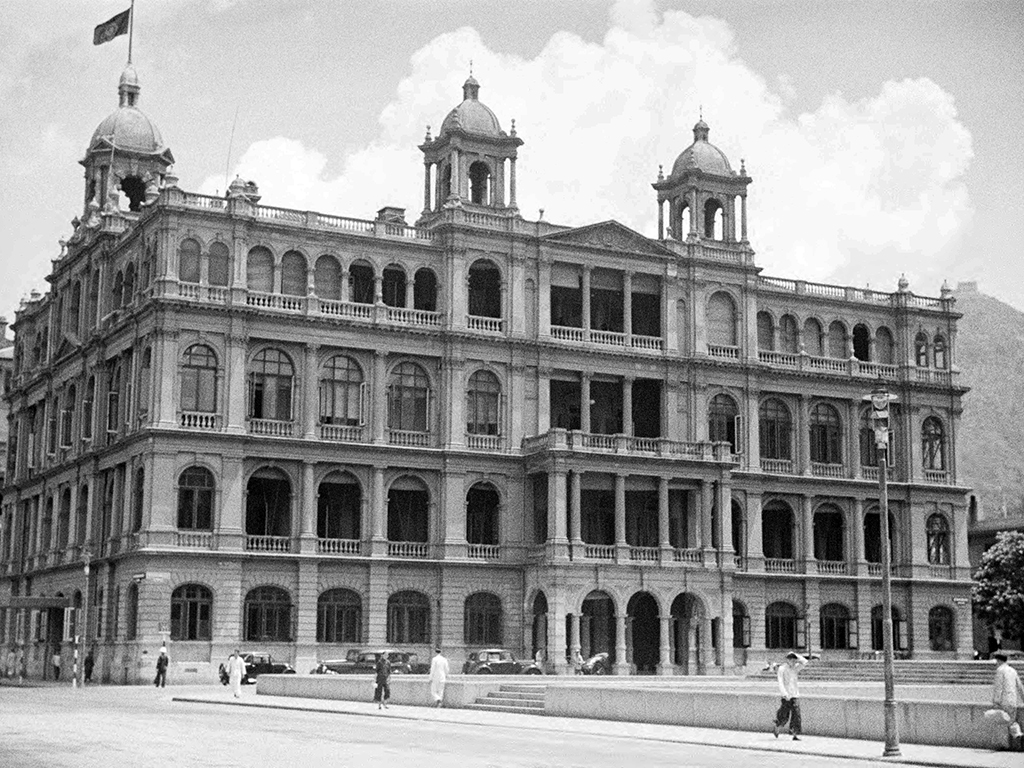
The Hong Kong Club made successful bids on the land in 1895, and the clubhouse was launched two years later. The Hong Kong Club was an association for foreigners (especially the British members) to gather for social and entertainment purposes in Hong Kong, as well as providing high-end catering and business services to senior government officials, senior local businessmen and celebrities. The Victorian-style clubhouse was four-storey high, with a stone arched hall at the front entrance, a terrace on top and towers on both sides. In 1899, the rear building of the clubhouse was also completed, and it was connected to the front of the building by a flyover on the second floor.
The Hong Kong Club was established in 1846 by eight British businessmen residing in Hong Kong. Although it is called “The Hong Kong Club”, it was not open to everyone because membership qualifications were limited to European citizens only. Until the mid-1960s, the association began accepting Chinese members and opened its door to women since 1996. The clubhouse was once a prominent communication centre in terms of politics and commerce. To preserve the building, members objected the reconstruction plan of the building three times, the general public also initiated campaigns to protect it. In 1981, the clubhouse was eventually rebuilt due to the Mass Transit Railway construction project and its dilapidation issue.
Photo courtesy of the American Geographical Society Library, University of Wisconsin- Milwaukee Libraries
Bank of China Building
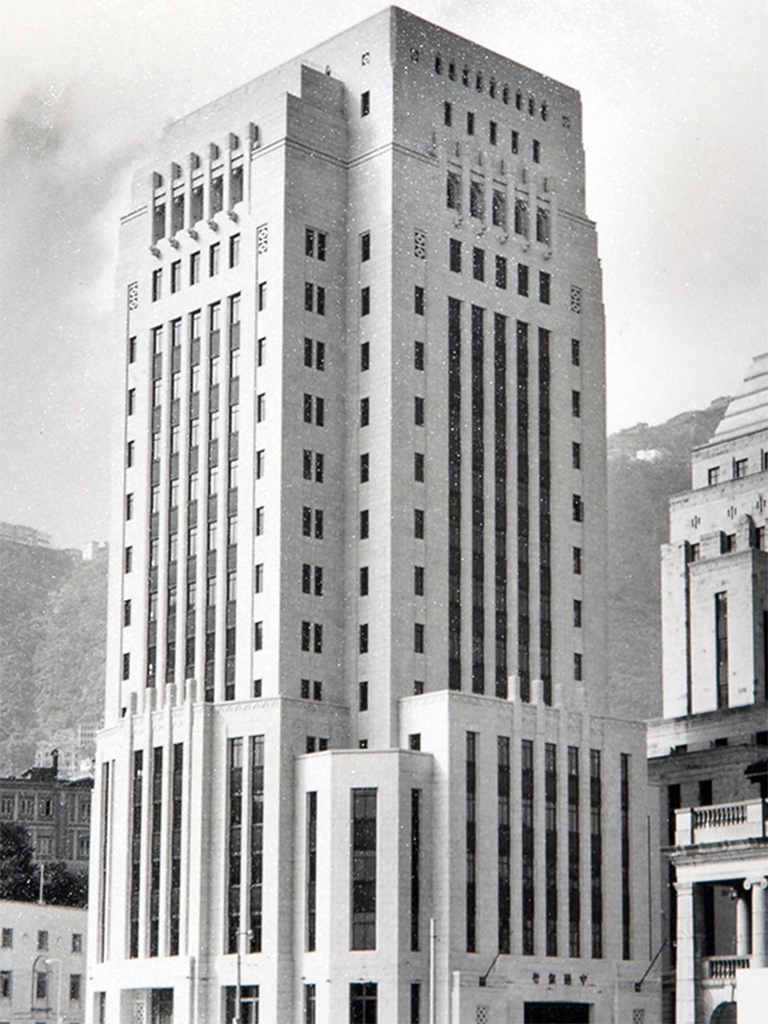
Bank of China first established its Hong Kong branch in 1917, with fewer than 10 employees. After years of development, the bank made a successful bid, albeit it at a high price, on the former City Hallin 1947. The 17-storey tower was completed in 1951, as the tallest building in Hong Kong at that time. It was confirmed as a Grade 1 historic building in 2009. The design of the building uniquely featured Chinese ornamental elements in the details. Placed at the east entrance are two uniquely shaped stone lions designed with Art Deco techniques.
The renowned Chinese-American architect Ieoh Ming Pei and his family contributed their three generations of work to Bank of China. Ieoh Ming Pei’s father was the first manager of the Hong Kong Branch; Ieoh Ming Pei designed the Bank of China Tower, and his son, Li Chung Pei, designed the new headquarter of Bank of China (Hong Kong) (“BOCHK”) Private Banking, which is situated in the Bank of China Building. In 2017, BOCHK issued the “Bank of China (Hong Kong) Centenary Commemorative Banknote”. The front panel of the banknote features the Bank of China Tower, superimposed with the image of the Bank of China Building. These buildings symbolise the glorious history of Bank of China’s centenary of service to Hong Kong.
Photo courtesy of Palmer & Turner (P&T Group)
The Cenotaph
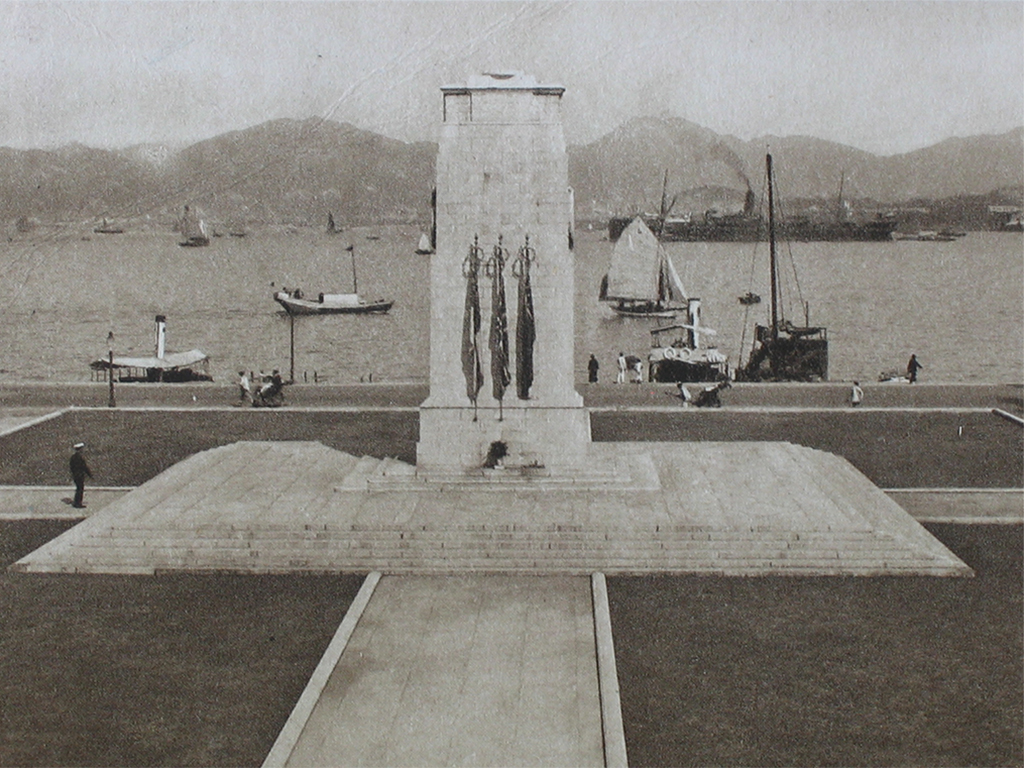
The Cenotaph is the first and only monument in Hong Kong officially built to commemorate the victims of World War I. The monument was unveiled in 1923 by Governor Sir Edward Stubbs, and was designed after the Cenotaph on Whitehall in London. At first, only the words “The Glorious Dead” and the year of World War I “1914-1918” were engraved on the Cenotaph. Later, “1939-1945” was also added to commemorate the victims of World War II. In the 1980s, “The Immortal of Heroes” was engraved, in Chinese, on the side of the monument, corresponding to the English engraving: “The Glorious Dead”. The Cenotaph was declared as a legal monument in 2013.
The Cenotaph was left with traces of artillery fire during World War II. In the past, on the “Remembrance Day” (the closest Sunday to November 11), commemorative ceremonies were held at the Hong Kong Zoological and Botanical Gardens, Statue Square and St. John’s Cathedral. Since 1981 it was combined into an annual event at the Cenotaph to commemorate the victims of the two World Wars and preach messages of peace. Since 1998, the memorial ceremony is held in the Memorial Shrine of the City Hall during the Chung Yeung Festival every year. The Hong Kong Ex-Servicemen’s Association still hosts memorial activities at the Cenotaph every November.
Public Domain Image (http://doi.org/10.3932/ ethz-a-|000163848)
The Third HSBC Main Building
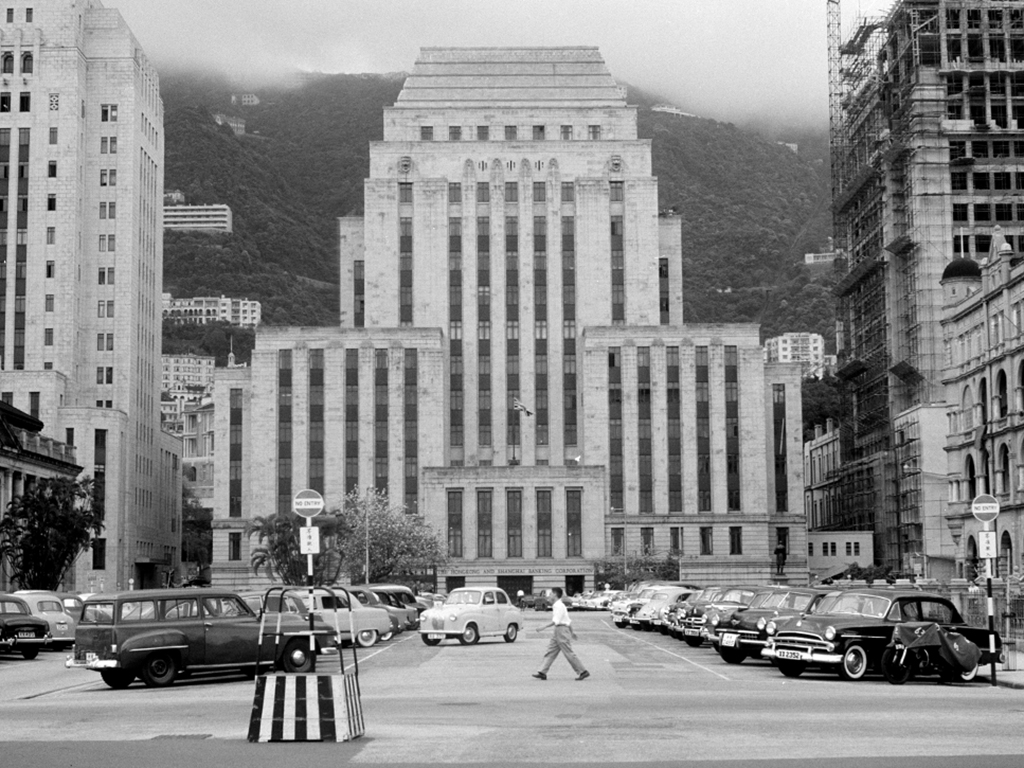
The Hongkong and Shanghai Banking Corporation Limited (HSBC) is one of the major banks in Hong Kong, with branches all over the world. The bank was committed to developing its business in Hong Kong even during the global economic depression in 1929 and decided to rebuild the Hong Kong headquarters with the expansion of its treasury and space to staff more employees. The third HSBC Main Building was still located at the then No. 1 Queen’s Road. The building was completed in 1935. It was 70 metres high and was the tallest building in Asia at that time. The building was recognised by its Art Deco style and avant-garde design and used high-strength steel to resist typhoons. It was also the first air-conditioned building in Hong Kong. It was demolished in 1981, and HSBC built its fourth main building on the original site in 1985.
There are two mighty bronze lions guarded outside the HSBC Main Building. The one on the right is named Stitt, calm and peaceful, symbolising the stability and security of HSBC; while the one on the left is called Stephen, growling and roaring, showcasing the bank’s strength and guardianship. During World War II, the bronze lions were looted and almost melted for making arms. After the war, the two lions were returned to their original positions, and now one could still see the bullet marks on them.
Photo courtesy of the American Geographical Society Library, University of Wisconsin- Milwaukee Libraries
Queen’s Pier
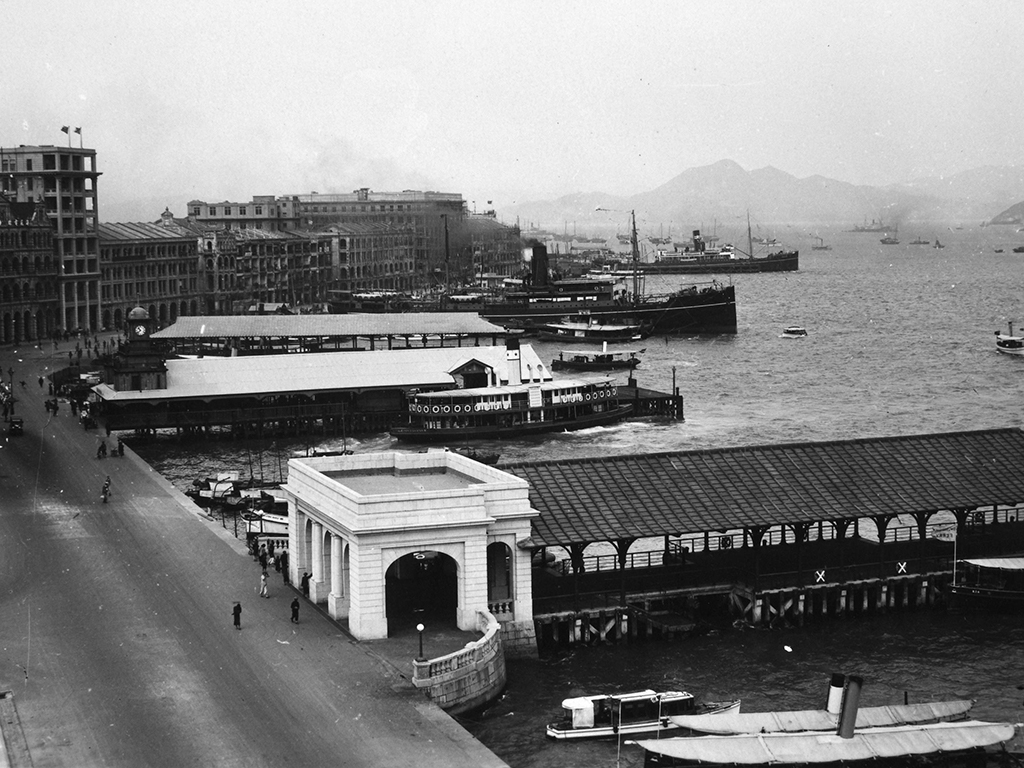
Queen’s Pier, named after Queen Victoria, was originally called Queen’s Statue Pier and built with wood. It was then rebuilt with reinforced concrete in 1921. The pier could berth four ships at the same time. The new pier was completed in 1925 and was renamed Queen’s Pier. In the 1950s, the reclamation projects carried out by the government led to the relocation of the pier. In 1954, the new Queen’s Pier opened and the old one was demolished the following year. After serving Hong Kong for over half a century, it was demolished again in 2007 due to another reclamation project.
The pier was built for special ceremonies where it welcomed new governors and bid farewell to departing governors. Governor Sir Reginald Edward Stubbs inspected the guard of honour and held farewell ceremonies at Queen’s Pier in 1925. The waterfront promenade at the pier was also used for large-scale events such as the military parade celebrating the birthday of King George V in 1928.
Image library reference: CO 1069/476 (22)
Photo courtesy of the National Archives of the United Kingdom
The Third General Post Office Building
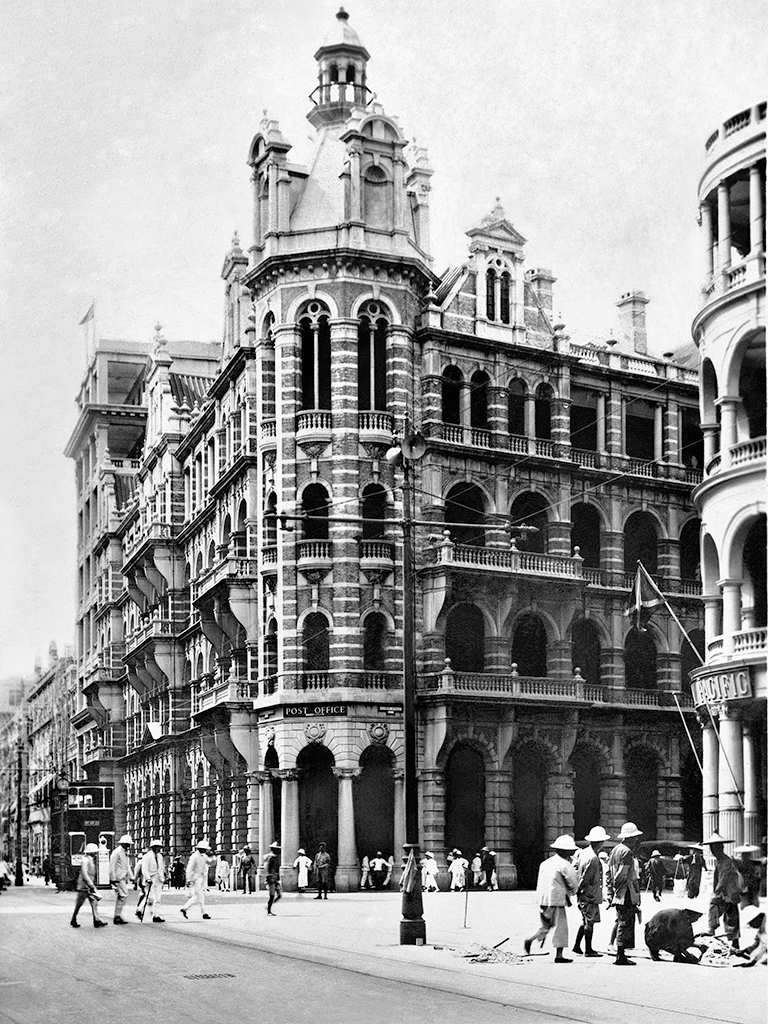
The current location of World Wide House was the third General Post Office building, which began its operations in 1911. It was a 4-storey building with walls made of red bricks and granite, reflecting a Victorian Gothic style of construction. Its symmetry, corner tower and gable roof represented the English Renaissance’s majestic influence. In addition to providing postal services, it was also a workplace for other government departments. Following World War II, public demands for postal services gradually increased. Concurrently, there was also a need to accommodate the construction of the Mass Transit Railway. The General Post Office was relocated to Connaught Place in 1976, after the building’s demolition.
Hongkong Post first tested its airmail service in 1932. Mail was sent by air to Marseille, France, and then by surface mail to its destination of London, England. In 1936, the Imperial Airways launched its regular airmail service and helped expand Hong Kong’s postal service to include service by air. From the 1950s, Hongkong Post created service counters particularly for female customers, who were mainly foreigners.
Photo courtesy of FormAsia Books Limited
Animation:
