Tsim Sha Tsui – Salisbury Road ca. 1950

360-degree panoramic artwork created by Pen So
Historical Hotspots:
Clock Tower
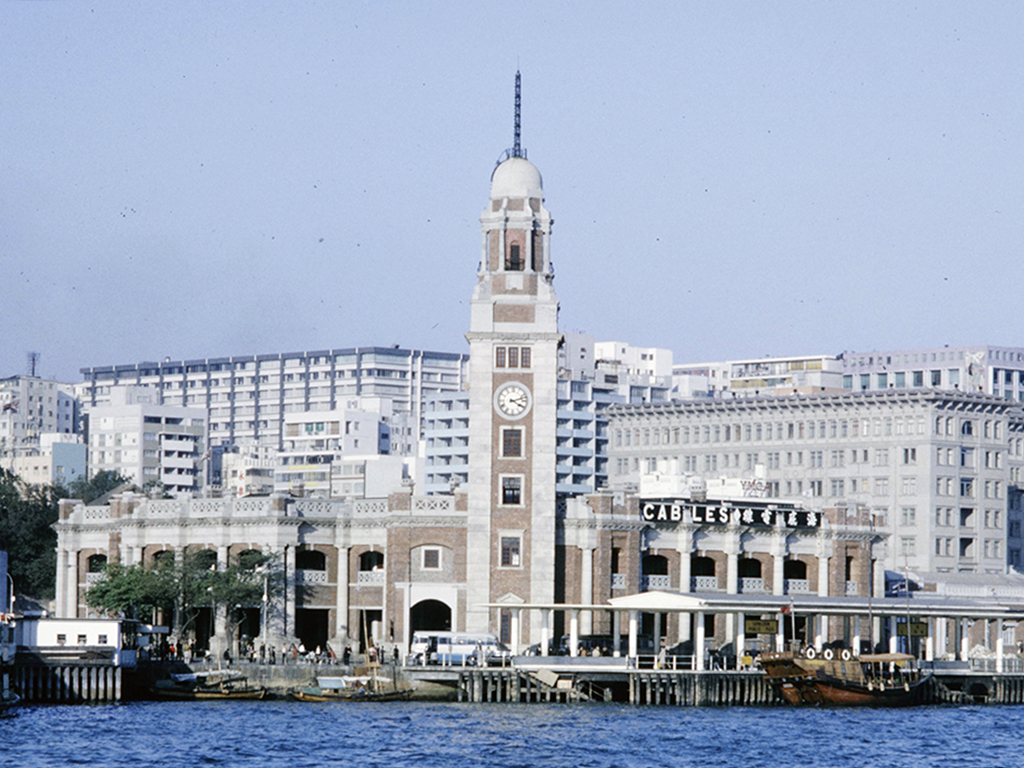
The clock tower was built in 1915. It was located on the southwest side of the former Kowloon Railway Station. The tower was 44 metres high and was built of red bricks and granites, with a dome-shaped roof equipped with a 7-metre high lightning rod. However, the clock tower was not officially launched for use until March 1921 due to the failure to install the electric timekeeping device. In 1978, the old railway station was demolished, and only the clock tower remained. It later became a symbol of the development of Hong Kong’s railway. In 1990, the clock tower was listed as a declared monument.
The clock tower had a four-sided clock and a bronze bell, which weighed 1.5 tons and was about 4 feet long. Powered by battery, as it was tough from an operational, maintenance and mechanical perspective, it had to install individual motors on each side of the clocks for it to function. There was a noticeable difference in the reported times on each side of the clock resulting in inconsistent alarms. The bronze bell ceased operation in 1950, and moved to Hung Hom along with the relocation of the Tsim Sha Tsui terminus in 1975, and was not moved to the clock tower until 2010.
Photo courtesy of the American Geographical Society Library, University of Wisconsin- Milwaukee Libraries
The Peninsula Hong Kong
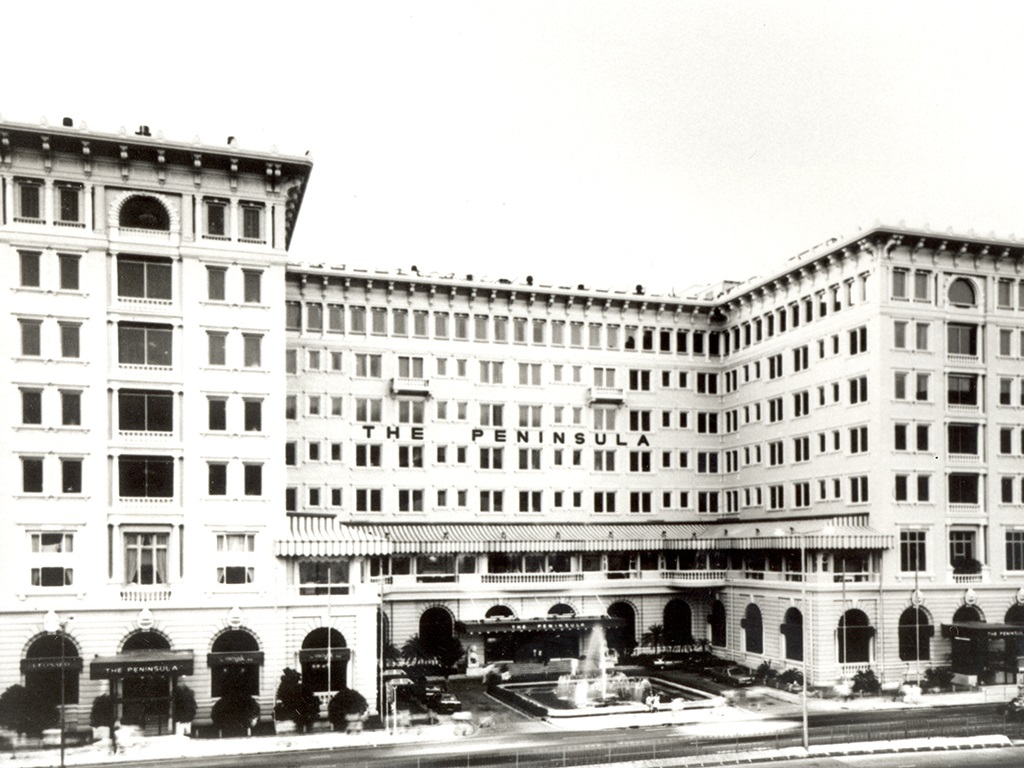
The Peninsula Hong Kong is one of the oldest hotels in Hong Kong’s history. It was completed in a Baroque Neoclassical style in 1928. The hotel was world-famous and was known as the most luxurious and magnificent hotel from east of the Suez Canal, carrying a beautiful name as “Grande Dame of the Far East” for its reputation. The Lobby has long been complimented as one of the most beautiful gathering places in Hong Kong, attracting people to enjoy the Peninsula Classic Afternoon Tea.
The luxury of the Peninsula lies not only in its architecture but also in its services. The hotel bought a batch of seven Rolls-Royce Silver Shadow in 1970, and each of them was worth HK$155,000. The transaction broke the records of Rolls-Royce’s single orders at that time, which was widely reported all over the world. The cars were coloured dark green, which was the iconic “Peninsula Brewster Green”. Nowadays, the hotel still has a luxurious Rolls-Royce fleet.
Photo courtesy of Special Collections, The University of Hong Kong Libraries
Marine Police Headquarters
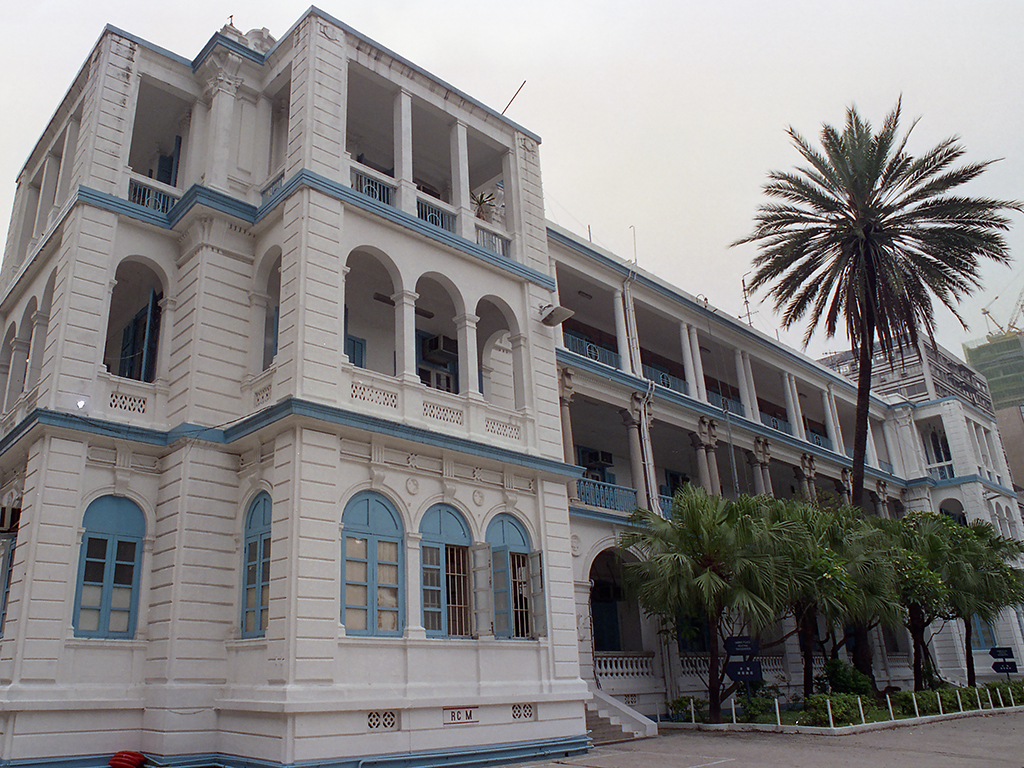
The former Marine Police Headquarters was completed in 1884. It comprised of the main building, a stable block and a signal tower. The compound can be seen as a combination of Victorian colonial design and Neoclassical architecture. The main building was occupied by the Marine Police, and the signal tower in the front was used to provide time signals to ships passing through the harbour. In 1907, the tower ceased operation, and was moved to Blackhead Point. The Marine Police moved out from the compound in 1996, and the government approved the revitalisation project of the building to 1881 Heritage in 2003.
In the age when the technology was not well developed, mariners solely relied on time reminder service from the shore. A reason for having the signal tower situated in that location was due to the sea vision of this hill exceeding 200 degrees. The time ball on the top of the tower was raised manually every morning and unloaded at 1 p.m. A vessel based on the unloading time to adjust the marine chronometer to calculate its position. Mechanical devices are now installed in the tower, and the time ball displayed on the top of the tower is referenced by time balls and observatory data in different locations.
Photo courtesy of Antiquities and Monuments Office
YMCA of Hong Kong
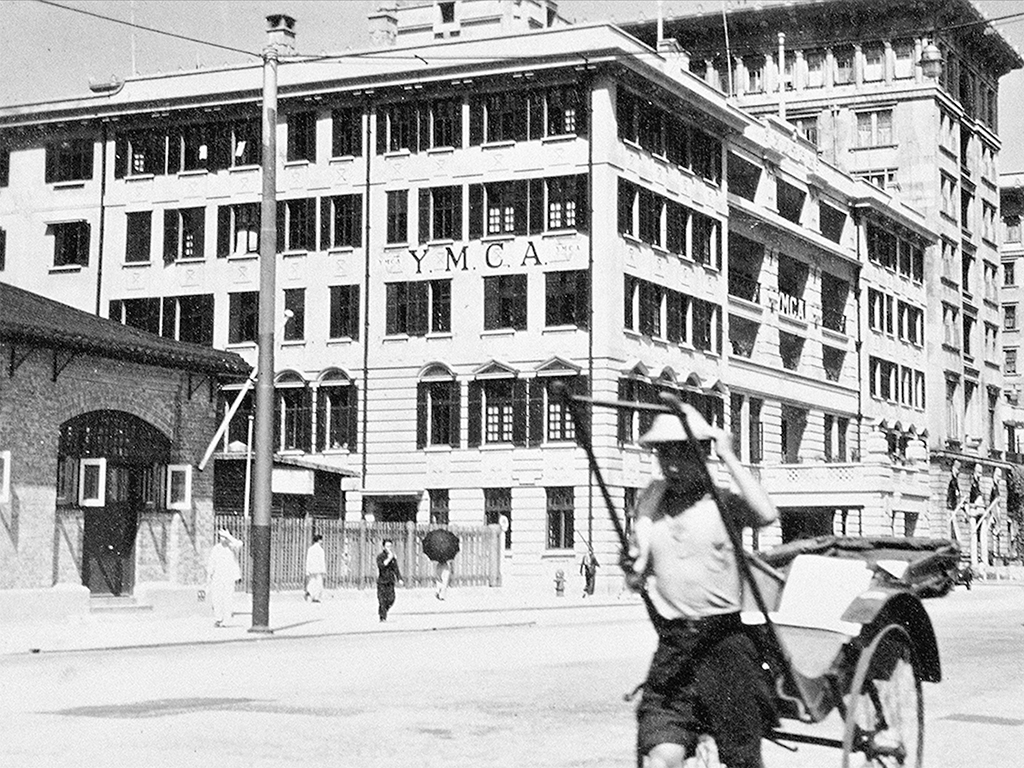
The YMCA of Hong Kong is one of the essential registered charities in the city. In 1922, the YMCA designated a site at Salisbury Road in Tsim Sha Tsui to set up its venue, and the building was built two years later. In 1931, there was an expansion on the west wing of the building to add accommodations, a swimming pool and an assembly hall. The YMCA developed rapidly in the 1950s and the building was reconstructed into a 16-storey complex in 1989. Three years later, kindergartens and professional training colleges were added along to provide more services to the public.
Many charitable organisations in Hong Kong make selfless contributions to the people. The YMCA was founded in the United Kingdom in 1844 with the goal of “improving the spiritual condition of young men employed in the drapery and other trades”. To carry forward this spirit of service, the YMCA came to Hong Kong in 1901. During its early days, it offered English courses, Bible studies, gymnastics, public lectures, and gospel meetings, then expanded the services to the community, and established kindergartens, primary and secondary schools.
Photo courtesy of YMCA of Hong Kong
The Kowloon Fire Station
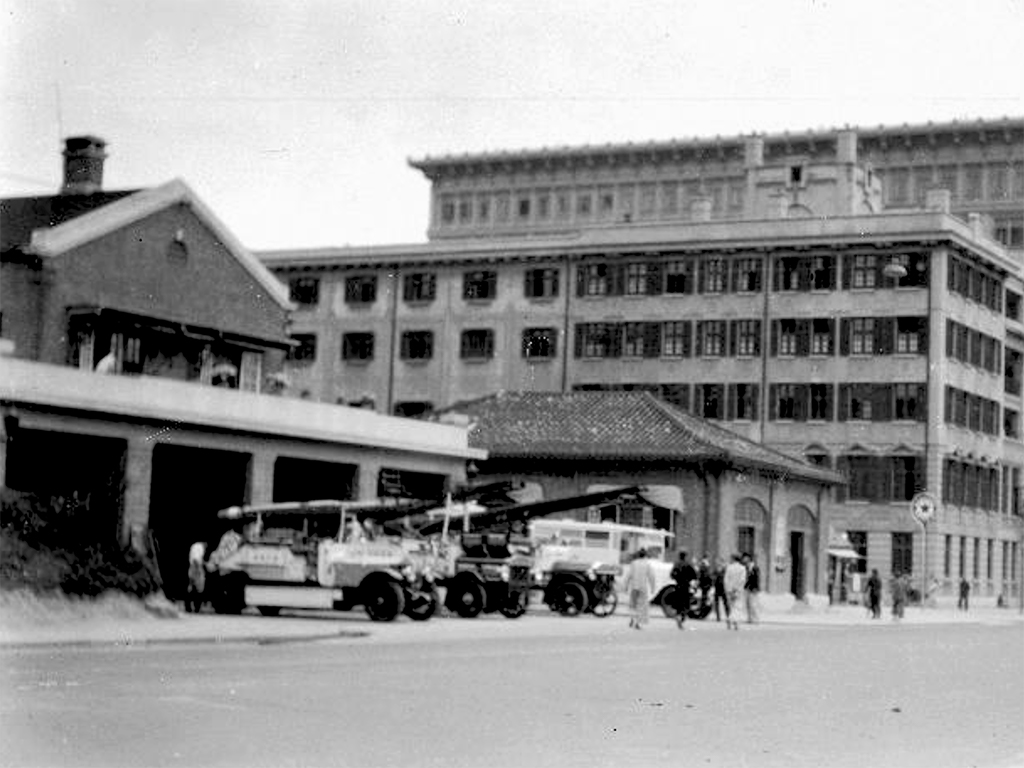
The Kowloon Fire Station was completed in 1920, and a 2-storey accommodation barrack was built in 1922. The fire station was relocated to a new site on Canton Road after 1971, and later this building was occupied by the Post Office for parcel delivery. By 1985, the upper floor of the main building was used as a locker room for the Marine Police. Afterwards, the basement of the main building was leased to the Yau Ma Tei and Tsim Sha Tsui Culture and Arts Association and the Welfare Handicrafts Store. The building was revitalised along with the Marine Police Headquarters in 2003 as 1881 Heritage.
The accommodation barrack built in 1922 offered residences for the 30 firefighters of the Station at the time. The ground floor was the station officer’s room, and included a kitchen and a laundry room. The rooms of the firefighters were located on the first floor. The barrack originally had two sliding poles such that as the firefighters received an alert, they could quickly slide from the sliding poles to the ground and respond to the emergency. Now one of the poles has been removed, while the other one remains present.
Photo courtesy of Museum of History
Animation:

To address the transportation needs of Hong Kong’s persistently growing labour force, the first generation of double-deck buses was imported by the Kowloon Motor Bus Company in 1949 and they operated within Kowloon. In 1962, China Motor Bus Company, the bus operator on Hong Kong Island also adopted double- deck buses in the area.